
Finding the Best Scottsdale Disorderly Conduct Lawyer – A Results-Driven List
Seeking the Best Scottsdale Disorderly Conduct Lawyer means you want fast action, smart motion practice, and evidence-based advocacy. Scottsdale cases move quickly; early decisions can shape outcomes. Use this guide to compare the Best Scottsdale Disorderly Conduct Lawyer options and map the steps that protect your record, job, and future.

Why This Guide to the Best Scottsdale Disorderly Conduct Lawyer Matters
Disorderly conduct (A.R.S. § 13-2904) is broad and often applied to heated, fast-moving situations. The best defenses use context, what was said, who started what, and what video shows, to separate protected speech or self-defense from crime.
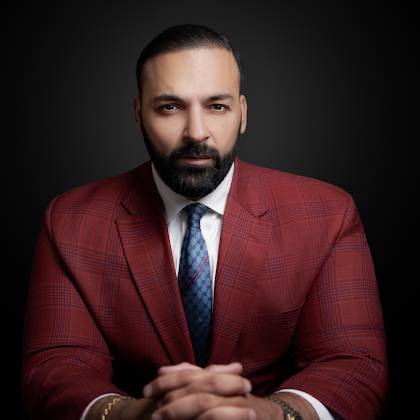
My name is Michael Tamou, founding attorney of Tamou Law Group. This guide shows how experienced Scottsdale defense teams approach First Amendment angles, self-defense, “refusal to disperse,” and weapon-related counts. Call early so body-cam, 911 audio, and witnesses don’t disappear.
Related Articles
Key Takeaways (Read This First)
- Venue matters: Most misdemeanors file in Scottsdale City Court; felonies go to Maricopa County Superior Court.
- The statute is broad: A.R.S. § 13-2904 covers fighting, unreasonable noise, abusive language, refusal to disperse, and reckless handling of a weapon.
- Evidence wins cases: Body-cam, 911 audio, civilian video, and neutral witnesses change outcomes.
- Act fast: Preserve video, canvass neighbors, and explore diversion/reduction options early.
- Goal-focused: Prioritize outcomes that protect work, licensing, and travel.
Table Of Contents
Best Scottsdale Disorderly Conduct Lawyer: Top 5 List
The order emphasizes Scottsdale-specific experience with A.R.S. § 13-2904. Use it to compare strategy and fit.

1
Michael Tamou – Tamou Law Group, PLLC
As a leading choice for Best Scottsdale Disorderly Conduct Lawyer, Michael builds defense leverage through early evidence control (body-cam, 911 audio, Ring/cell video), context analysis (who initiated force, what was actually said), and precise statutory mapping to the correct subsection. Typical angles include protected speech vs. true threats, self-defense vs. mutual combat, “refusal to disperse” clarity, and lack of recklessness on weapon-related counts. Resolution paths range from diversion and deferred judgments to trial when needed. Michael Tamou holds award as a top-tier criminal defense lawyer in Arizona, including Elite Lawyer 2025, Top 40 Under 40 National Trial Lawyers, and Super Lawyers 2025.
- Strengths: First Amendment framing, self-defense theory, suppression motions, witness/cell video synthesis, targeted mitigation.
- Client experience: rapid evidence requests and plain-English strategy on plea vs. trial.
“We build defenses based on the untold not found within the police reports.”

2
David A. Black – Law Offices of David A. Black
David M. Black is a respected Scottsdale attorney with years of experience representing clients in criminal defense matters. He has earned a strong reputation in the legal community for his professionalism, dedication, and consistent results. Known for his personable approach, David builds lasting relationships with clients while guiding them through challenging legal situations. His commitment to excellence has made him a trusted choice for individuals seeking skilled representation in Scottsdale.

3
Feldman & Royle, Attorneys at Law
Feldman & Royle is a well-regarded Scottsdale law firm focused on providing high-quality criminal defense representation. Founded by experienced attorneys with extensive trial backgrounds, the firm has developed a reputation for thorough preparation and attention to detail in every case. Clients appreciate the team’s professionalism, responsiveness, and clear communication throughout the legal process. Their dedication to achieving favorable results has made Feldman & Royle a respected name in the Scottsdale legal community.

4
Richard J. Suzuki – Suzuki Law Offices
Suzuki Law Offices is a highly respected Scottsdale firm known for its skilled and client-focused criminal defense representation. Founded by Richard Suzuki, a former prosecutor, the firm brings valuable insight into how cases are built and prosecuted. Clients value the team’s professionalism, accessibility, and commitment to guiding them through each stage of the legal process. With a reputation for integrity and results, Suzuki Law Offices has become a trusted choice for individuals seeking strong legal advocacy in Scottsdale.

5
Tyler Allen – Tyler Allen Law Firm
Tyler Allen Law Firm is a well-established Scottsdale practice recognized for providing dedicated criminal defense services. Led by attorney Tyler Allen, the firm is known for its professionalism, clear communication, and commitment to client needs. Clients appreciate the personalized attention they receive and the firm’s ability to navigate complex legal matters with confidence. Tyler Allen Law Firm’s reputation for reliability and quality representation has made it a respected name in the Scottsdale legal community.
Scottsdale Disorderly Conduct Law (A.R.S. § 13-2904)
Subsections include fighting/violent behavior, unreasonable noise, abusive or offensive language/gestures, disrupting lawful meetings, refusal to disperse, and reckless handling of a deadly weapon.
What the State Must Prove
That your conduct fits a specific subsection and that you acted with the required mental state (often “intent” or “knowing,” and for weapon counts, “recklessly”). We force proof beyond stock phrases like “disturbing the peace.”
Why Context Is Everything
Heated words can be protected speech. “Unreasonable” noise depends on time, place, and manner. “Refusal to disperse” assumes a lawful, audible order. Weapon counts need actual risk, not mere possession. The Best Scottsdale Disorderly Conduct Lawyer turns context into leverage.
Read the statute: A.R.S. § 13-2904
Penalties: Misdemeanor vs. Felony
Most charges are Class 1 misdemeanors; weapon-related allegations can be Class 6 felonies.
Class 1 Misdemeanor (most subsections)
| Area | Typical Exposure | Defense Notes |
|---|---|---|
| Jail | Up to 6 months (often negotiable or suspended) | Mitigation + evidentiary defects can avoid custody |
| Fines/Fees | Up to $2,500 + surcharges | Diversion/reductions can minimize financial impact |
| Probation | Up to 3 years | Target tailored terms; avoid overbroad conditions |
| Collateral | Employment, licensing, immigration | Engineer outcomes that protect future options |
Class 6 Felony (weapon-related)
| Area | Typical Exposure | Defense Notes |
|---|---|---|
| Prison Range | Prison eligibility; range varies with priors | Challenge “recklessness”; seek misdemeanor redesignation |
| Probation | Felony probation possible | Argue for undesignated class 6 → later misdemeanor |
| Rights | Firearm/civil rights implications | Mitigation and negotiated terms matter greatly |
Defense Strategy That Moves the Needle
1) First Amendment & Abusive Language
Insults and heated words, without true threats, are often protected. We separate speech from conduct and file targeted motions.
2) Self-Defense & Mutual Combat
We analyze who initiated contact, proportionality, prior threats, and whether the state can disprove self-defense beyond a reasonable doubt.
3) “Unreasonable Noise” in Context
Time, place, manner, and purpose matter. We use neighbor canvasses and video to show reasonableness.
4) Refusal to Disperse
The order must be lawful and audible. Body-cam timing and crowd dynamics often decide these counts.
5) Weapon-Related Counts
Recklessness requires more than firearm presence. We scrutinize handling, distance, and whether conduct created substantial risk.

Common Mistakes After an Arrest
- Waiting to hire counsel: Witnesses and video disappear fast in Scottsdale.
- Posting about it: Social posts often become exhibits.
- Assuming “it’s just a misdemeanor”: Collateral consequences can exceed the sentence.
- Skipping mitigation: Counseling, classes, or neighbor agreements can change outcomes.
Local Courts & Procedures
Scottsdale City Court – 3700 N. 75th St., Scottsdale, AZ 85251 (misdemeanors).
Maricopa County Superior Court – 175 W. Madison St., Phoenix, AZ 85003 (felonies).
Calendars and disclosure practices differ. A Best Scottsdale Disorderly Conduct Lawyer times motions and negotiations to those rhythms.
Our 6-Step Scottsdale Disorderly Conduct Defense Process
- Immediate Intake & Evidence Plan – Preserve body-cam/911; canvass neighbors; secure Ring/phone video.
- Witness Workup – Neutral witness interviews; relationship mapping; timeline charts.
- Suppression & Legal Angles – Unlawful detention; vagueness/overbreadth; First Amendment defenses.
- Fact-Driven Mitigation – Counseling/classes/restitution to shape negotiations.
- Negotiation With Leverage – Use defects to seek dismissal, diversion, or reductions.
- Trial Preparation – Build visuals and outlines early; no last-minute scrambling.
Representative Outcomes & Client Notes
- Speech protected: Abusive-language count dismissed after motion practice.
- Noise charge reduced: Context and neighbor statements → civil compromise and dismissal.
- Weapon allegation re-charged: No proof of recklessness → reduced to misdemeanor with minimal terms.
“They found holes in the story that the Victim told and my case was dismissed allowing me to keep my job.”
“I risked losing my fingerprint clearance card and Michael Tamou helped save it. Don’t think twice, he is your guy.”
Domestic Violence & Scottsdale Disorderly Conduct: What Changes
When a Scottsdale disorderly conduct case gets a “domestic violence” (DV) designation, the rules and consequences change immediately. Arizona’s DV law applies when certain crimes (including disorderly conduct) are committed within qualifying relationships such as current/former spouses, romantic partners, co-parents, and household/family members.
What Makes It “DV” in Scottsdale
- Qualifying relationship required: DV is a designation, not a standalone crime; the relationship must fit A.R.S. § 13-3601’s list.
- Same underlying statute: The charge can still be disorderly conduct (A.R.S. § 13-2904), the DV tag adds procedures and collateral effects.
- Arrest & weapon seizure rules: DV designation can influence arrest decisions and allow weapon seizure in certain circumstances.
Immediate Practical Effects in Scottsdale
- No-contact/protection orders: Courts often impose no-contact terms as a release condition; protective orders may also issue.
- DV treatment is mandatory on conviction: Judges must order completion of an approved DV offender treatment program for misdemeanor DV convictions.
- Enhanced repeat-offender risk: Multiple prior DV convictions can create Aggravated Domestic Violence exposure, a felony with steeper penalties.

Penalties & Collateral Consequences (Scottsdale Focus)
| Area | Without DV Tag | With DV Tag |
|---|---|---|
| Charge Level | Class 1 misdemeanor (most); Class 6 felony if weapon/reckless handling | Same levels, but DV procedures/terms apply and repeat DV risks increase |
| Treatment | Judicial discretion | Mandatory DV treatment upon misdemeanor DV conviction |
| Firearms | Varies by terms and status | Potential federal prohibition after a qualifying misdemeanor DV conviction |
| Release Conditions | Standard conditions possible | Commonly includes no-contact orders, possible firearm restrictions, and compliance checks |
| Recidivism Enhancements | N/A specific to DV | Aggravated Domestic Violence felony exposure for repeated DV offenses within 84 months |
Defense Angles We Use in Scottsdale DV-Tagged Disorderly Conduct
- Relationship challenge: Show the parties do not meet A.R.S. § 13-3601’s DV relationship definition.
- Speech vs. conduct: Separate protected speech from unlawful acts; push back on “abusive language” theories.
- Self-defense & mutual combat: Establish who initiated force, proportionality, and whether the state can disprove self-defense.
- Lawful order & audibility: For “refusal to disperse,” attack whether the order was both lawful and audible in context.
- Weapon “recklessness” proof: Force the state to prove actual risk beyond mere possession (for Class 6 scenarios).
- Outcome engineering: Seek non-DV resolutions, diversion, or redesignation paths that avoid DV treatment mandates and firearm disabilities where appropriate.
Key Scottsdale Takeaway
If your Scottsdale disorderly conduct charge carries a DV tag, the stakes rise: mandatory treatment on conviction, stricter release terms, and potential federal firearm consequences. Early, targeted strategy can sometimes remove the DV designation or steer the case into a non-DV resolution.

FAQs: Best Scottsdale Disorderly Conduct Lawyer (Accordion)
What is disorderly conduct in Scottsdale under A.R.S. § 13-2904?
It’s a broad law covering fighting, unreasonable noise, abusive language/gestures, disrupting meetings, refusing to disperse, and reckless handling of a weapon. In Scottsdale, prosecutors must still prove the exact subsection and your mental state. We separate protected speech or lawful self-defense from criminal conduct using body-cam, 911 audio, and witness context.
Is abusive language alone enough for a Scottsdale disorderly conduct conviction?
Usually no, offensive words alone are often protected speech unless they’re true threats or tied to unlawful conduct. Scottsdale cases often turn on whether the language crossed into a threat or was paired with physical acts. We file motions that isolate speech from conduct and force the state to meet its burden.
Can a Scottsdale disorderly conduct charge be dismissed or reduced?
Yes, dismissals and reductions are possible when context undermines the police narrative. Proof gaps on who started contact, the reasonableness of noise, clarity of “disperse” orders, or lack of recklessness with a weapon can support diversion, re-charging to a lesser count, or outright dismissal in Scottsdale courts.
Do I need to appear in person for my Scottsdale disorderly conduct court dates?
Often your lawyer can cover early settings, but trials and sentencings usually require you. Scottsdale City Court and Superior Court have specific calendars; we’ll map what you must attend and handle logistics if you live out of state.
What are the penalties for a Scottsdale disorderly conduct charge?
Most are Class 1 misdemeanors (up to 6 months jail, fines, probation); weapon-related cases can be Class 6 felonies. In Scottsdale, outcomes depend on facts, priors, mitigation, and motion results. We target terms that protect work, licensing, and travel.
How long do Scottsdale disorderly conduct cases take?
Misdemeanors often resolve in a few months; felonies generally take longer due to discovery and motions. We balance momentum with thorough preparation, using early evidence control to drive negotiations.

Talk to a Scottsdale Disorderly Conduct Lawyer Today
The earlier we engage, the more we can do for your record and your case. Get a customized plan in days, not months.
Tamou Law Group, PLLC
9375 E Shea Blvd #100, Scottsdale, AZ 85260
Serving Scottsdale, Phoenix, Tempe, Mesa, Chandler, and communities across Maricopa County.