
Healthcare & AHCCCS Fraud Defense Lawyers

Investigated for healthcare or AHCCCS fraud by the Attorney General’s MFCU, AHCCCS-OIG, or a federal agency? Whether you are a provider accused of billing fraud or a recipient accused of benefits fraud, these cases are charged under A.R.S. § 36-2918.01 and fraudulent schemes (§ 13-2310) and can threaten your license, your practice, and your freedom. Do not respond to a subpoena, audit, or interview before you speak with a defense lawyer.
Recognized By






As Seen On

Recognized By

What Is Healthcare and AHCCCS Fraud in Arizona?
Quick answer: Healthcare fraud is obtaining money from a health program by deception. In Arizona, fraud against AHCCCS (the state Medicaid program) is charged under A.R.S. § 36-2918.01 (false claims and statements), and almost always also under fraudulent schemes (A.R.S. § 13-2310), a Class 2 felony, and fraud against the State (§ 13-2311). There are two broad types: provider fraud (false billing, upcoding, phantom services, kickbacks) and recipient fraud (false eligibility statements). Larger cases are prosecuted federally under 18 U.S.C. § 1347, the False Claims Act, and the Anti-Kickback Statute. The cases turn on intent, and billing or coding errors are not the same as fraud.
Both Sides
Former Prosecutors · Law Enforcement · Public Defenders
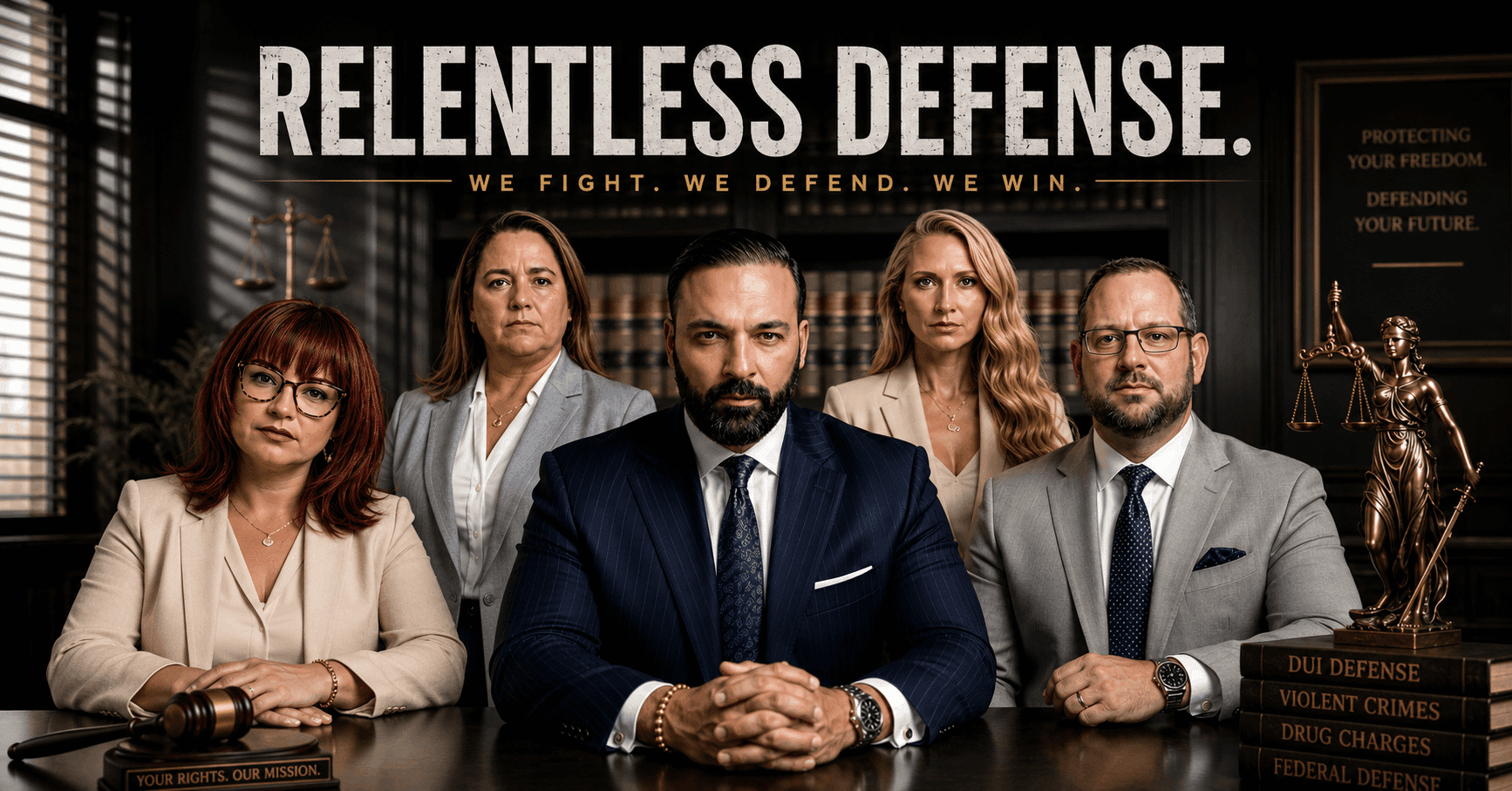
When you call Tamou Law Group, you reach a firm that handles criminal defense exclusively, with serious experience defending healthcare fraud and other white-collar cases across Arizona. Our team includes former prosecutors and law enforcement officers, so we know exactly how the State builds these cases, and where they fall apart.
At many large firms, the name on the building is a marketing figurehead, you rarely get them on the phone and your case goes to a junior associate. When you hire Tamou Law Group, your case is handled by a full team of attorneys, not associates, including Michael Tamou.
On This Page
- What Is Healthcare and AHCCCS Fraud in Arizona?
- Is healthcare fraud a felony in Arizona?
- How much prison time does healthcare fraud carry in Arizona?
- How does the State prove intent in a healthcare fraud case?
- What is the difference between provider fraud and recipient fraud?
- Can a healthcare fraud case cost you your medical license?
- Can restitution help resolve a healthcare fraud case?
- How the Charge Sets the Healthcare-Fraud Exposure
- Penalties & Sentencing
- Defenses That Work
- Our Defense Team
- FAQs
If you’ve been charged with healthcare fraud in Arizona, you probably have urgent questions about what you’re facing and what comes next. Here are straight answers to the questions people ask most, with a plain-English breakdown of the law under A.R.S. § 36-2918.01, the penalties, and the defenses that matter most.
Is healthcare fraud a felony in Arizona?
Yes. AHCCCS fraud under A.R.S. § 36-2918.01 is a felony, and healthcare billing cases are almost always also charged as fraudulent schemes (A.R.S. § 13-2310), a Class 2 felony — one of the most serious non-violent charges in Arizona. Cases may also be charged as fraud against the State (A.R.S. § 13-2311) or federally under 18 U.S.C. § 1347.
Awards & Recognition
Our recognition for Phoenix white collar defense is independently verified, click any award to confirm it:
- National Trial Lawyers Top 100
- National Trial Lawyers Top 40 Under 40
- Elite Lawyer 2026 – Criminal Defense
- Super Lawyers – Southwest
- National College for DUI Defense (NCDD)
When you are looking for the best Phoenix white collar lawyers, these are the independently verified credentials that matter, earned by Founding Attorney Michael Tamou and a full team of attorneys, including former prosecutors.
How much prison time does healthcare fraud carry in Arizona?
Exposure ranges from probation with restitution on a lower-value or recipient case to roughly 3 to 12.5 years on a Class 2 fraudulent-schemes count for a provider scheme. Federal health care fraud under 18 U.S.C. § 1347 carries up to 10 years per count, plus civil False Claims Act treble damages and mandatory program exclusion.
How does the State prove intent in a healthcare fraud case?
The State must show you acted knowingly with intent to obtain a benefit you were not entitled to — not through a billing error, software default, or staff mistake. Coding is complex and error-prone, so a documentation gap, an upcoding dispute, or a good-faith interpretation of ambiguous rules is not fraud. Proving that distinction is the heart of the defense.
What is the difference between provider fraud and recipient fraud?
Provider fraud involves false or inflated billing — upcoding, billing for services never rendered (phantom billing), unbundling, medically unnecessary services, or kickbacks for referrals. Recipient fraud involves false income, residency, or household statements on an AHCCCS eligibility application. The two require different defenses, but both turn on intent and often start as a civil audit.
Can a healthcare fraud case cost you your medical license?
Yes, and this is often the biggest risk. A conviction, and sometimes even an indictment, can trigger licensing board action and mandatory exclusion from AHCCCS, Medicare, and Medicaid, which can end a practice regardless of the criminal outcome. We defend the criminal case with the license and exclusion consequences front of mind.
Can restitution help resolve a healthcare fraud case?
Yes. Repaying a genuine overpayment, paired with mitigation, is powerful — especially for a first-time case — and can support a civil resolution or probation instead of prison. Payers often inflate the alleged loss through statistical extrapolation, so establishing the true overpayment, sometimes by challenging that methodology, is central.
How the Charge Sets the Healthcare-Fraud Exposure
AHCCCS-specific counts are serious on their own, but the fraudulent-schemes count, plus federal exposure and program exclusion, drive the real risk.
| Statute | Conduct | Class / Penalty | Notes |
|---|---|---|---|
| A.R.S. § 36-2918.01 | False AHCCCS claims/statements | Felony | Provider & recipient |
| A.R.S. § 13-2310 | Healthcare scheme to defraud | Class 2 Felony | 3 – 12.5 years |
| A.R.S. § 13-2311 | Fraud against the State | Class 5 Felony | 6 mo – 2.5 years |
| 18 U.S.C. § 1347 | Federal health care fraud | Felony | Up to 10 yrs/count |
| 42 U.S.C. § 1320a-7b | Anti-Kickback Statute | Felony | Exclusion + fines |
*State ranges vary with the amount, priors, and aggravators. A conviction (and sometimes an indictment) triggers licensing action and mandatory program exclusion.
What the State Must Prove for Healthcare Fraud
To convict you of Healthcare Fraud under A.R.S. § 36-2918.01, the prosecutor must prove every one of these elements beyond a reasonable doubt. If even one fails, the charge fails.
- 1A claim or statement to a health program. You submitted, or caused to be submitted, a claim or statement to AHCCCS or another payer.
- 2Falsity. The claim or statement was false or misleading, a coding dispute or documentation gap is not automatically false.
- 3Knowingly. You acted knowingly, not through a billing error, software default, or staff mistake, the central contested element.
- 4Intent to obtain a benefit. You intended to obtain payment or benefits to which you were not entitled.
Examples of Conduct Charged as Healthcare Fraud
- Billing for services or supplies never provided (phantom billing)
- Upcoding to a higher-paying procedure than performed
- Billing medically unnecessary services or unbundling codes
- Paying or receiving kickbacks for patient referrals
- Submitting false income or household information to qualify for AHCCCS
What Sentence Could You Actually Face?
Healthcare-fraud penalties range from probation with restitution to over a decade in prison on the fraudulent-schemes count, plus the career-ending consequences of license loss and program exclusion. Restitution and early intervention are critical.
Class 5
Recipient / Lower-Value
Class 2
Provider Scheme (13-2310)
Federal
1347 / FCA / AKS
⚠ Exclusion Can End the Practice
For providers, the most devastating consequence is often not prison, it is licensing board action and exclusion from AHCCCS, Medicare, and Medicaid, which can end a practice even on a plea or a civil resolution. We defend the criminal case with the license and exclusion consequences front of mind, and coordinate with board counsel, because protecting your ability to practice is frequently the real goal.
How We Fight Arizona Healthcare Fraud Cases
Every case has weak points. These are the defenses we look at first.
Attacking Intent & the Theory
Billing Error, Not Fraud. Coding is complex and error-prone. A mistake, a software default, or a staff error lacks the intent that fraud requires.
Good-Faith Coding Position. A reasonable, defensible interpretation of ambiguous coding rules is a dispute, not a crime.
Recipient Mistake. On the eligibility side, an honest error or misunderstanding on an application is not knowing fraud.
Medical Necessity. Where services were genuinely provided and supportable, ‘unnecessary services’ theories fail.
Attacking the Evidence & Process
Statistical Extrapolation. Payers often extrapolate a small sample across all claims to inflate the alleged loss; we challenge the methodology.
The Records Tell the Story. A careful audit of the medical records frequently supports the billing the State calls fraudulent.
Improper Audit or Subpoena. Statements and records obtained beyond the civil scope, or without proper process, can be challenged.
Coordinating License & Exclusion. We work to protect licensure and program eligibility alongside the criminal defense.
The Experts We Bring to the Table
The State builds financial-crime cases with investigators, forensic auditors, and data analysts. We answer with the same caliber of specialists.
Forensic Accountants
Following the Money
Independently trace transactions, audit the State’s spreadsheets, and expose double-counting, missing context, and innocent explanations.
Certified Fraud Examiners
Intent & Scheme Analysis
Evaluate whether the conduct actually fits the charge or is an ordinary business dispute, and where the intent evidence falls short.
Computer Forensics Experts
Devices & Accounts
Examine the digital evidence, emails, logins, and IP data, and challenge whether it really proves who acted.
Financial & Data Analysts
Records & Patterns
Reconstruct the financial record from bank and accounting data and test the assumptions behind the State’s loss calculations.
Tax & Regulatory Experts
Compliance & Reporting
Explain industry practice, reporting rules, and tax treatment that the State has mischaracterized as a crime.
Valuation & Restitution Experts
Loss & Restitution
Establish the true loss amount, often far lower than alleged, which drives both the felony class and any restitution.
Recent Healthcare Fraud Defense Results
Every case is unique and results depend on the facts, but these examples reflect how our firm handles healthcare fraud cases across Arizona.
Provider Billing Investigation
No Charges Filed
A records audit by our team showed the billing was supportable; we presented it to the MFCU and no charges were filed.
Alleged Upcoding
Charges Dismissed
We established a good-faith coding position and a documentation basis for each claim, defeating intent; the case was dismissed.
Recipient Eligibility Case
Probation, No Prison
Restitution and proof of an honest application error resolved a recipient case to probation, with no prison.
Extrapolated Overpayment
Charges Reduced
We dismantled the payer’s statistical extrapolation, cutting the alleged loss and the charge level dramatically.
Kickback Allegation
Resolved Without Exclusion
We negotiated a resolution that preserved our client’s ability to participate in federal health programs.
Phantom-Billing Claim
Charges Dismissed
Patient records and schedules confirmed the services were rendered; the State dismissed the fraud and theft counts.
What Clients Say About Tamou Law
Real Google reviews from clients we have defended across Phoenix and Maricopa County. Every review is from a criminal defense client, never padded with non-legal work.
Clients reach us searching for the best healthcare fraud lawyer in Phoenix, an AHCCCS fraud defense attorney, or help with an MFCU, AHCCCS-OIG, or federal healthcare investigation. Our Phoenix criminal defense lawyers and Scottsdale criminal defense attorneys defend healthcare fraud and other white-collar cases across Phoenix, Scottsdale, Mesa, Tempe, Chandler, Gilbert, Glendale, Peoria, and all of Maricopa County, from offices in both cities. This page is part of our Arizona white collar crimes practice. Call 623-321-4699 or contact our team for a free, confidential consultation, 24/7.
Arizona Healthcare Fraud FAQs
Quick answers to the questions we hear most about healthcare fraud charges, penalties, and defenses in Arizona.
Is healthcare fraud a felony in Arizona?
Yes. AHCCCS fraud (A.R.S. 36-2918.01) is a felony, and healthcare billing cases are almost always also charged as fraudulent schemes (A.R.S. 13-2310), a Class 2 felony, one of the most serious non-violent charges in Arizona.
Who investigates healthcare and AHCCCS fraud?
The Arizona Attorney General’s Medicaid Fraud Control Unit (MFCU) and the AHCCCS Office of Inspector General, often alongside federal agencies like the FBI, HHS-OIG, and the U.S. Attorney’s Office.
What is the difference between provider and recipient fraud?
Provider fraud involves false or inflated billing, upcoding, phantom services, or kickbacks. Recipient fraud involves false statements on an eligibility application. Both require proof of intent and are defended differently.
Is a billing or coding error fraud?
No. Fraud requires a knowing intent to deceive. Coding is complex, and a mistake, a software default, a staff error, or a good-faith interpretation of ambiguous rules is not fraud. Proving that distinction is the core defense.
Can a healthcare fraud case cost me my license?
Yes, this is often the biggest risk. A conviction, and sometimes even an indictment, can trigger licensing board action and mandatory exclusion from AHCCCS, Medicare, and Medicaid, which can end a practice. We defend with those consequences in mind.
What is the Anti-Kickback Statute?
A federal law (42 U.S.C. 1320a-7b) that makes it a crime to pay or receive anything of value for referrals of patients covered by federal health programs. Violations carry prison, fines, and program exclusion, and often accompany billing-fraud charges.
Can healthcare fraud be charged federally?
Yes. Larger or multi-payer cases are prosecuted under 18 U.S.C. 1347, the False Claims Act (with treble damages and whistleblower origins), and the Anti-Kickback Statute. Federal and state cases can run in parallel.
What is statistical extrapolation in these cases?
Payers often audit a small sample of claims, find an error rate, and extrapolate it across all claims to allege a huge overpayment. The methodology is frequently flawed, and challenging it can dramatically reduce the alleged loss.
What should I do if I get an audit or MFCU letter?
Do not respond, give a statement, or hand over records without counsel. Audits and interviews are how these cases are built. Early involvement lets us present the records favorably, sometimes before any charge.
Can restitution help resolve a healthcare fraud case?
Yes. Repaying a genuine overpayment, paired with mitigation, is powerful, especially for a first-time case, and can support a civil resolution or probation. Establishing the true overpayment is central.
Will I get a real attorney or a junior associate?
At many large firms the name on the door is a marketing figurehead and your case goes to a rotating associate. At Tamou Law Group your defense is handled by a full team of experienced attorneys, not associates, including founding attorney Michael Tamou. Call 623-321-4699, 24/7.
Key Takeaways
- AHCCCS (Medicaid) fraud is charged under A.R.S. § 36-2918.01, and almost always also as fraudulent schemes (§ 13-2310), a Class 2 felony.
- There are two tracks: provider fraud (false billing, upcoding, phantom services, kickbacks) and recipient fraud (false eligibility).
- The Attorney General’s Medicaid Fraud Control Unit (MFCU) and AHCCCS-OIG investigate, often alongside federal agencies.
- Larger cases go federal: 18 U.S.C. § 1347, the False Claims Act, and the Anti-Kickback Statute.
- The cases turn on intent, a billing or coding error, an honest mistake, or a documentation gap is not fraud.
- A conviction, or even an indictment, can mean license loss and program exclusion, ending a practice independent of any sentence.
- Your case is handled by a full team of attorneys, not associates, including Michael Tamou, available 24/7 at 623-321-4699.
Two Arizona Offices, One Team
We serve all of Maricopa County and the surrounding area, with free, confidential consultations 24/7 by phone and in-person meetings at either office by appointment.
Case Results Disclaimer: The results described on this page are based on specific facts and circumstances and do not guarantee or predict a similar outcome in any future case. Every case is different. Past results do not guarantee future results. No attorney-client relationship is formed by viewing this page or submitting a contact form until a written fee agreement has been signed. Tamou Law Group, PLLC is licensed to practice law in the State of Arizona. This website is for informational purposes only and does not constitute legal advice.