
Police Want to Question You in Scottsdale? Do You Have To?
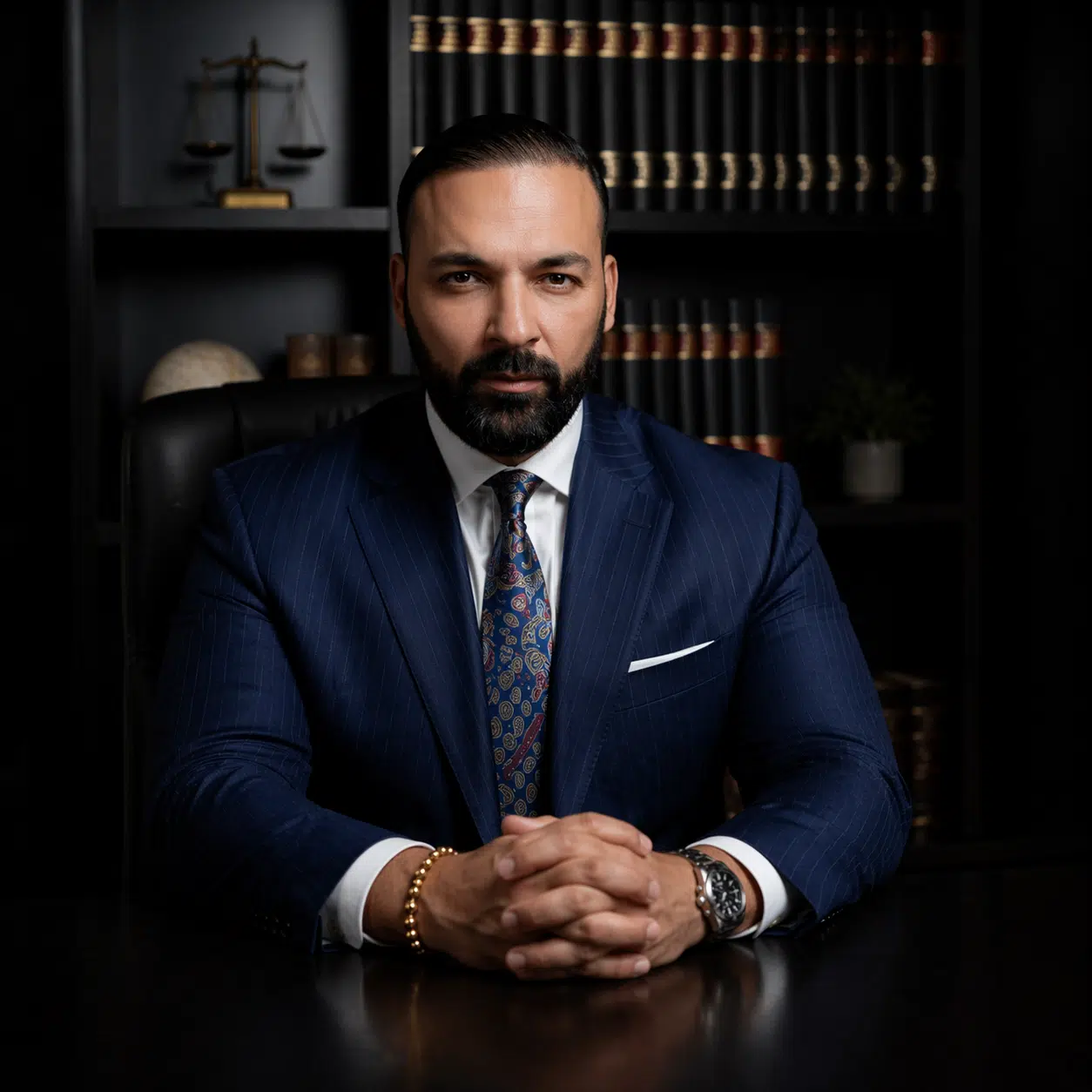
You are never required to talk your way out of an investigation. Here’s what happens when Scottsdale police or a detective want to question you—and why silence protects you.
Recognized By






As Seen On

Recognized By

Why a Detective Is Calling You
No, you do not have to talk to Scottsdale police or a detective. There is no law that requires a citizen to answer investigators’ questions, sit for an interview, or explain yourself — whether it happens over the phone, on your doorstep, or at police headquarters. The Fifth Amendment right to remain silent and the Sixth Amendment right to counsel apply whether or not you have been arrested. The safest response to a detective who wants to “get your side of the story” is: “I want a lawyer before I answer any questions.” Then stop talking and call a defense attorney.
A voicemail from a Scottsdale detective, a business card wedged in your door, or a text asking you to “come in and chat” feels small compared to being arrested. It is not small. In most criminal investigations, the detective’s interview happens before any charge is filed — and it is often the single most important piece of evidence the state ever collects, because it comes straight from you, in your own words, before you had a lawyer helping you understand what you were being asked and why.
This page exists because so many people get this moment wrong. They think refusing to talk makes them look guilty, or that a friendly detective is just trying to help them clear their name. Neither is true. Below is exactly what your rights are, how a “voluntary” interview differs from a custodial interrogation, and what to actually do if Scottsdale police want to question you. For what happens if the investigation turns into an arrest, see our guide to what happens after a Scottsdale arrest, and if you are worried a warrant may already exist, see our Scottsdale warrant search guide.
Scottsdale Police Department investigators — assigned through the department’s Investigative Services units — do not usually call people who are irrelevant to a case. If a detective has your name and number, it typically means one of a few things: you are a witness, you are a person of interest, or you are already the primary suspect and the department is building a case before it ever goes to a prosecutor. Detectives are trained to sound casual and non-threatening precisely because a relaxed, conversational tone gets people to talk without a lawyer present. That is not a coincidence — it is a technique, and it is legal for them to use it.
The key thing to understand is that at this stage, nothing has been filed yet. No charge exists. The interview itself is often the evidence-gathering step that decides whether a charge gets filed at all, and what it says. That makes this one of the highest-leverage moments in the entire case — higher leverage, in many cases, than anything that happens after an arrest.
Do I Have to Talk to the Police in Scottsdale?
No. There is no Arizona or federal law that obligates a private citizen to answer a police officer’s or detective’s questions about a criminal investigation. This is true whether the contact happens by phone, by a knock on your door, by a business card left with a request to “call me back,” or in person at a Scottsdale police substation. You are not required to explain where you were, what you did, who you were with, or anything else — even if you believe you did nothing wrong.
Two constitutional protections are doing the work here:
- The Fifth Amendment right to remain silent. You cannot be compelled to be a witness against yourself. This applies to any statement to police, not just formal testimony, and it applies whether or not you have been arrested.
- The Sixth Amendment right to counsel. You have the right to have a lawyer with you, or to have a lawyer speak for you, any time the state is investigating you for a crime. You can invoke this right before an arrest, not just after one.
The one narrow exception people sometimes confuse this with is a traffic stop, where Arizona law requires you to provide your name to an officer in specific circumstances. That is not the same as answering a detective’s investigative questions about an alleged crime, and it does not require you to say anything else.
Voluntary Interview vs. Custodial Interrogation — What Is the Difference?
This distinction is the single most misunderstood part of a police investigation, and detectives use it to their advantage.
A voluntary interview
If you are not under arrest and are free to leave at any time, the law treats the conversation as voluntary. Because you are not “in custody,” officers are not required to read you Miranda warnings before questioning you — even if you are being questioned as the main suspect in a serious case. Anything you say in that setting can still be used against you in court. This is exactly why so many detectives prefer to arrange a phone call or a station visit rather than making an arrest first: it lets them gather a full statement with no warnings required.
A custodial interrogation
Once you are in custody — meaning a reasonable person in your position would not feel free to leave, whether or not handcuffs are involved — the police must inform you of your Miranda rights before continuing to question you: the right to remain silent, that anything you say can be used against you, and the right to an attorney, appointed if you cannot afford one. If they interrogate you in custody without giving these warnings, your statements can potentially be suppressed. But note what this does not cover: it does not apply to the voluntary pre-arrest interview, and it does not undo a statement you already volunteered before ever being taken into custody.
The practical lesson: do not wait for someone to read you your rights before deciding to invoke them. Whether or not Miranda technically applies to your situation, you can invoke your right to silence and your right to a lawyer at any point in any conversation with police.
Miranda, A.R.S. 13-3988, and When Warnings Actually Apply
Arizona’s own evidence rules reinforce the constitutional framework. Under A.R.S. 13-3988, a confession or self-incriminating statement is admissible only if it was voluntarily given, and a judge must independently decide voluntariness before a jury ever hears it. In deciding whether a statement was voluntary, the statute directs courts to look at factors including whether you were told your statements were optional and could be used against you, and whether you were informed of your right to counsel and whether counsel was present.
Put together with the constitutional Miranda framework, three things matter in practice:
- Miranda warnings are required only for custodial interrogation — not for a voluntary conversation you were free to walk away from.
- Anything you say voluntarily, warned or not, can be used against you if a court finds it was given freely and not coerced.
- You do not need to wait for warnings to invoke your rights. You can say “I am not answering questions and I want a lawyer” the moment a detective starts talking to you about an alleged crime, custodial or not.
Why “Just Clearing It Up” Backfires
Almost everyone who agrees to talk to a detective without a lawyer believes the same thing: if I just explain what really happened, this will go away. In practice, it almost never works that way, for a few consistent reasons:
- You do not know what the detective already has. You cannot calibrate your explanation to evidence you have not seen — and volunteering extra detail can hand investigators facts, timelines, or admissions they did not have before.
- Innocent inconsistencies look like lies. Memory is imperfect. A detail you get slightly wrong under pressure, compared against video, phone records, or another witness, can be framed as a deliberate lie rather than ordinary human error.
- The interview is being recorded or documented. Every word becomes part of the permanent record the prosecutor reviews when deciding whether, and what, to charge.
- Detectives are trained interviewers; you are not. Techniques like minimization, false sympathy, and suggesting the detective already “knows the truth” are designed to get people to explain, justify, or admit — even people who did nothing wrong.
- You cannot un-say it. Once a statement is made, an attorney cannot retroactively unmake it. The best defense move is almost always made before you speak, not after.
None of this means you are guilty for wanting to explain yourself — it is a completely normal instinct. But the interview room is not designed to protect that instinct. A lawyer can talk to the detective on your behalf, find out what the investigation is actually about, and decide with you whether and how to respond — something you cannot safely do alone in the moment.
A Detective Left a Card, Texted, or Called Me — What Do I Do?
This is the exact moment to act, calmly and quickly, without contacting the detective yourself first.
What to do
- Save the card, voicemail, text, or email exactly as received — do not delete anything.
- Write down the date, time, detective’s name, badge or unit information, and phone number.
- Call a defense attorney before calling the detective back.
- Let your attorney make contact, learn what the investigation concerns, and decide the right response — which may be no response at all, a written statement, or an in-person meeting with counsel present.
- If a detective shows up in person, you can politely say: “I am not going to answer questions without my attorney,” and ask if you are free to go or free to close the door.
What not to do
- Do not call the detective back to “just find out what this is about” — that conversation itself can be used as evidence.
- Do not agree to “come in for a quick chat” without a lawyer present.
- Do not text or email the detective explaining your side of events.
- Do not ask friends, family, or witnesses to compare stories — that can look like, or become, evidence tampering.
- Do not ignore it indefinitely if you have already been told charges may be filed; get counsel in place so someone is tracking the case for you.
Can I Be Arrested If I Refuse to Talk?
Refusing to answer questions, by itself, is not a crime and is not grounds for arrest. Police need probable cause to arrest you — a reasonable basis, grounded in facts, to believe you committed a specific offense — and that probable cause has to come from evidence, not from your silence. In some cases, a detective may already have enough evidence to arrest you regardless of whether you talk; in others, your silence genuinely can prevent an arrest from ever happening because the state never gets the admission it was hoping for. Either way, staying silent does not create legal exposure that did not already exist, and it protects you from creating more.
Where This Goes if You Are Charged
A pre-charge Scottsdale police investigation can end in no charge at all, a misdemeanor charge filed in Scottsdale City Court and prosecuted by the City Prosecutor, or, for more serious allegations, a felony charge filed in Maricopa County Superior Court and prosecuted by the Maricopa County Attorney’s Office. Which path a case takes depends heavily on what evidence — including any statement you gave — existed by the time the detective’s file reached a prosecutor. That is exactly why the interview stage, before any charge exists, is worth protecting as carefully as the courtroom stage.
The Experts We Bring to Pre-Charge Investigations
The window before charges are filed is an evidence-and-strategy window as much as a legal one. We bring in specialists who work that window with us.
Interrogation & False-Confession Experts
How Statements Get Shaped
Analyze interview recordings and technique for coercive tactics, leading questions, and minimization strategies that can produce unreliable or misleading statements — even from innocent people.
Digital Forensics Specialists
Phones, Texts & Location Data
Review phone records, texts, and location data detectives may already hold before you ever respond — so your attorney knows what the state actually has, not what it claims to have.
Police Practices Consultants
How the Stop and Search Were Done
Former law enforcement professionals who measure the stop, entry and search against policy, training and lawful procedure.
Private Investigators
Building Your Side First
Independently canvass witnesses, pull surveillance, and lock down alibi evidence before memories fade or footage is overwritten — work that starts before any charge is filed.
Investigator Liaison Counsel
Speaking to the Detective for You
Make direct contact with the assigned Scottsdale detective on your behalf, learn the scope and posture of the investigation, and control what — if anything — gets communicated back.
Mitigation Specialists
Getting Ahead of a Charge
Build the record — character, context, cooperation on your terms — that can persuade a detective’s supervisor or a reviewing prosecutor not to file, or to file the lesser charge the facts actually support.
How Tamou Law Group Handles Pre-Charge Investigations
The moment you tell us a Scottsdale detective has reached out, we move immediately — often before you have said a single word to law enforcement. We make direct contact with the assigned detective, find out what the investigation actually involves, and decide with you whether any response is warranted, and if so, in what form. If a statement genuinely serves your interests, we control how, when, and where it happens, with counsel present the entire time.
Because our team includes former prosecutors, law enforcement officers, and public defenders, we know how Scottsdale PD investigators build a file and how the City Prosecutor and Maricopa County Attorney’s Office decide what to charge from it. We work out of offices at 9375 E Shea Blvd, Suite 100 in Scottsdale and 2390 E Camelback Rd, Suite 130 in Phoenix, and can meet with you at either location on short notice. Getting involved before that decision is made is often the highest-leverage moment in the entire case. Call 623-321-4699 any time, day or night, or read more about your options at our Scottsdale criminal defense practice page.
Awards & Recognition
Our recognition for Phoenix criminal defense defense is independently verified, click any award to confirm it:
- National Trial Lawyers Top 100
- National Trial Lawyers Top 40 Under 40
- Elite Lawyer 2026 – Criminal Defense
- Super Lawyers – Southwest
- National College for DUI Defense (NCDD)
When you are looking for the best Phoenix criminal defense lawyers, these are the independently verified credentials that matter, earned by Founding Attorney Michael Tamou and a full team of attorneys, including former prosecutors, public defenders, and law enforcement.
What Clients Say About Tamou Law
Real Google reviews from clients we have defended across Phoenix and Maricopa County. Every review is from a criminal defense client, never padded with non-legal work.
Frequently Asked Questions
Do I have to talk to the police if they want to question me?
No. There is no law requiring you to answer a police officer’s or detective’s questions about an investigation, whether or not you have been arrested. The Fifth Amendment protects your right to remain silent, and you can invoke it at any time, including before any arrest occurs.
A detective wants to question me — does that mean I am under arrest?
Not necessarily. Detectives frequently request “voluntary” interviews before any arrest or charge exists. You are often free to leave and are not in custody, which means no Miranda warning is legally required — but anything you say can still be used against you later.
Should I answer police questions without a lawyer?
No. Even people who believe they are innocent can unintentionally provide facts, timelines, or inconsistent details that a detective and prosecutor later use against them. The safer approach is to say you want a lawyer present before answering anything, and let your attorney evaluate and control the conversation.
A detective left a card on my door — what should I do?
Save the card and any related voicemail or text, write down the details, and call a defense attorney before calling the detective back. Let your attorney make contact, learn what the investigation involves, and decide the right response on your behalf.
Can I be arrested if I refuse to talk to the police?
Refusing to answer questions is not a crime and is not, by itself, grounds for arrest. Police need probable cause based on actual evidence to arrest you. Your silence does not create legal exposure — it simply avoids adding to whatever evidence already exists.
Is it suspicious to ask for a lawyer during a police interview?
No, and it cannot legally be treated as evidence of guilt. Asking for an attorney is a constitutional right available to anyone, guilty or innocent, and prosecutors are not permitted to argue that invoking it proves wrongdoing.
What is the difference between a voluntary interview and a custodial interrogation?
A voluntary interview happens when you are free to leave at any time and are not in custody; Miranda warnings are not required in that setting. A custodial interrogation happens once a reasonable person would not feel free to leave; at that point, police must give Miranda warnings before continuing to question you.
Do police have to read me my rights before questioning me in Scottsdale?
Only if you are in custody. If you are not under arrest and are free to leave, Scottsdale police can question you without ever reading Miranda warnings, and any statement you make can still be used against you. This is why you should invoke your right to silence and counsel on your own, rather than waiting to be warned.
Two Arizona Offices, One Team
We serve all of Maricopa County and the surrounding area, with free, confidential consultations 24/7 by phone and in-person meetings at either office by appointment.
Case Results Disclaimer: The results described on this page are based on specific facts and circumstances and do not guarantee or predict a similar outcome in any future case. Every case is different. Past results do not guarantee future results. No attorney-client relationship is formed by viewing this page or submitting a contact form until a written fee agreement has been signed. Tamou Law Group, PLLC is licensed to practice law in the State of Arizona. This website is for informational purposes only and does not constitute legal advice.