
Attacking the Crime Lab in a Phoenix Drug Case

The State treats the crime lab report as the final word, on what the substance is and how much it weighs. It is not. Lab errors, contamination, and weight problems create real reasonable doubt, and weight can be the difference between diversion and mandatory prison.
Recognized By



As Seen On

Recognized By

Can the drug lab results be wrong in a drug case?
Quick answer: Yes. Before the State can convict, it must prove the substance is the drug charged and confirm its weight, both by scientific testing. Labs make mistakes: contamination, mislabeling, faulty instruments, and disputed weight (including packaging) all happen. Because the threshold amount triggers mandatory prison, even a small weight error can change everything. We obtain the raw data and, where it matters, have the substance independently re-tested.
On This Page
Both Sides
Former Prosecutors · Law Enforcement · Public Defenders
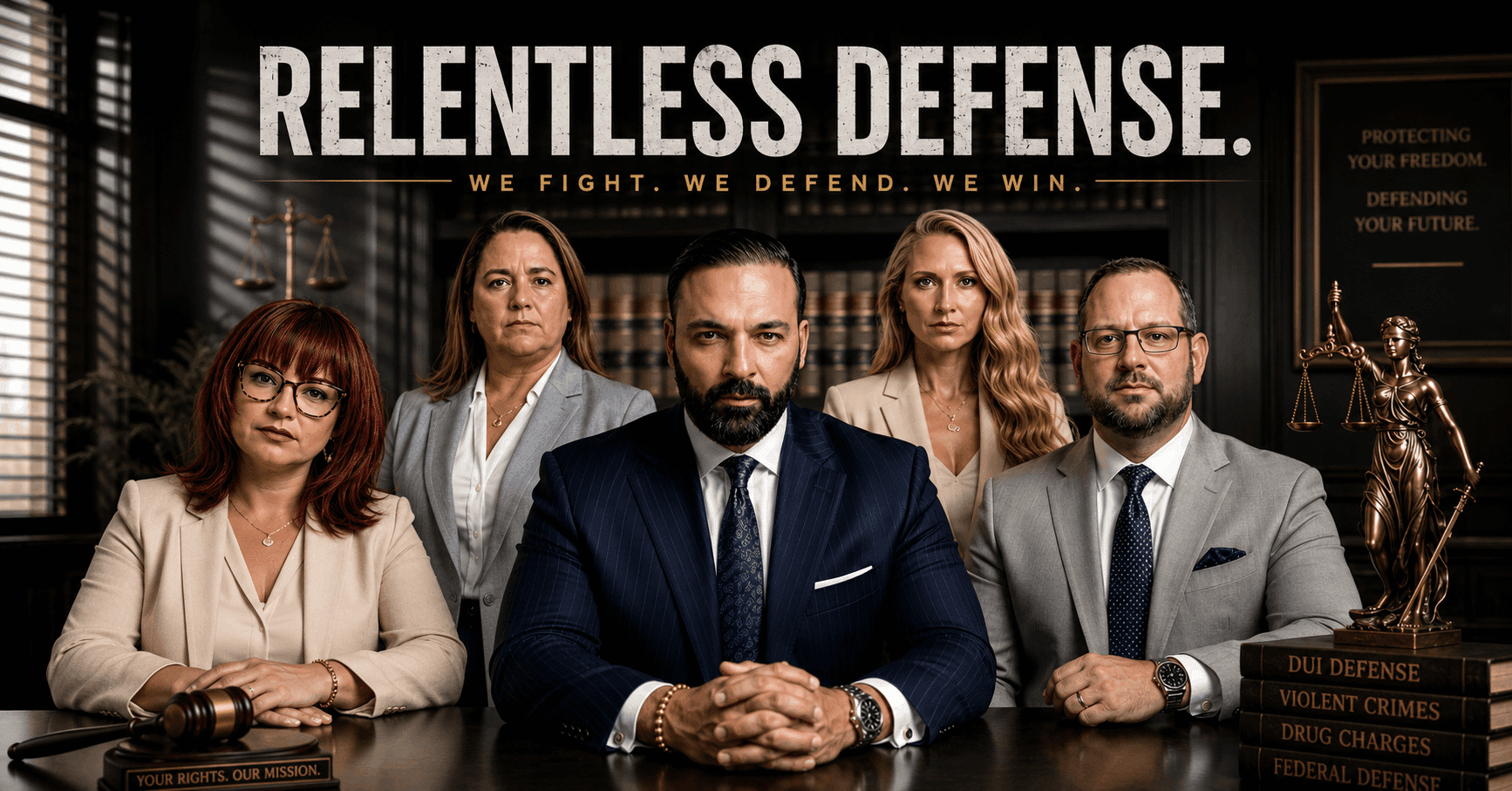
When you call Tamou Law Group, you reach a firm that handles criminal defense exclusively, with serious experience defending drug charge cases across Arizona. Our team includes former prosecutors and law enforcement officers, so we know exactly how the State builds these cases, and where they fall apart.
At many large firms, the name on the building is a marketing figurehead, you rarely get them on the phone and your case goes to a junior associate. When you hire Tamou Law Group, your case is handled by a full team of attorneys, not associates, including Michael Tamou.
The Lab Report Is Evidence, Not Gospel
A conviction requires proof the substance is actually the drug charged, and how much of it there is. Both can be challenged.
Juries, and even defendants, tend to treat a crime-lab report as unquestionable. It is not. It is a piece of evidence produced by people and instruments, and like any evidence it can be wrong, incomplete, or overstated. The State carries the burden of proving, beyond a reasonable doubt, both the identity and the quantity of the drug. Each is a place to fight.
Is It Even the Drug They Say?
The substance has to be scientifically identified. The methods and the analyst can both be challenged.
Field tests, the roadside color-change kits, are notoriously unreliable and produce false positives on everyday substances. They are not enough for a conviction; the State needs confirmatory lab testing, typically gas chromatography-mass spectrometry (GC-MS). We examine whether:
- The confirmatory testing was actually done, or the case rests on an unreliable field test.
- The instruments were calibrated and maintained, with documented quality control.
- The analyst was qualified and followed accepted protocols, without shortcuts.
- There was contamination or carryover from other samples in the lab.
Arizona crime labs, like labs nationwide, have had real scandals involving backlogs, dry-labbing, and mishandled evidence. We know what to request and what to look for.
The Threshold Fight
Weight decides whether prison is mandatory. We challenge how it was measured and what was included.
Because the threshold amount drives mandatory prison, the reported weight is one of the most important, and most contestable, numbers in the case. We look at:
- What was weighed, whether packaging, cutting agents, or moisture were improperly included in the total.
- Usable quantity, whether the amount is a usable quantity of the actual drug, not trace residue.
- Aggregation, whether separate items were improperly combined to push the total over a threshold.
- Scale calibration, whether the balance was certified and correctly used.
Shaving the reliable weight below the threshold does not just reduce the sentence, it can remove the mandatory-prison requirement entirely and open the door to probation or diversion.
Chain of Custody and Independent Testing
From seizure to courtroom, every hand the evidence passes through is a chance for error, and a place to challenge.
The State must be able to trace the evidence from the moment it was seized, through the property room and the lab, to the courtroom, and show it was not altered, mixed up, or tampered with. Gaps or errors in the chain of custody raise doubt about whether the tested drugs are even the ones allegedly seized from you.
We also have the right to independent testing. Where identity or weight is genuinely in dispute, we retain our own forensic chemist to re-examine the substance and audit the State lab’s work. A qualified expert can reveal errors the report hides.
This works hand in hand with challenging the search that produced the drugs, and with our full Phoenix drug defense.
The Experts We Bring to Drug Cases
Drug cases are built on searches, lab reports, and informants. We bring the specialists who take each one apart, click any to see how.
Forensic Chemists
Independent Lab Testing
Re-test the substance by GC-MS and audit the State lab’s calibration, quality-control, and analyst notes to challenge the drug’s identity. They also re-weigh the sample, excluding packaging and moisture, because a weight pushed over the statutory threshold is what triggers mandatory prison, and an error there can drop a case to probation.
Police Practices Consultants
How the Stop and Search Were Done
Former law enforcement professionals who measure the stop, entry and search against policy, training and lawful procedure.
Private Investigators
Informants & Witnesses
Dig into the confidential informant and the controlled buy, the deal the CI received, their pending charges and prior lies, and whether the buy was actually searched, monitored, and recorded. They also locate witnesses and establish who else had access, exposing the bias and gaps that collapse sale and trafficking cases.
Digital Forensics Examiners
Phones & Access
Examine device extractions, metadata, and access logs to answer the question the State glosses over: who actually knew about and controlled the drugs. In shared cars, homes, and phones, that access data, and the absence of your prints or DNA, is what defeats a “constructive possession” theory built on mere presence.
Independent Crime-Lab Auditors
Testing, Calibration and Handling
Independent laboratory scientists who audit testing procedures, calibration records and evidence handling from collection to courtroom.
Treatment & Diversion Advocates
Prop 200 / TASC
Build the treatment and mitigation record that moves eligible cases off the prison track: screening for TASC diversion (which ends in dismissal), documenting Prop 200 eligibility, and lining up assessment and counseling. On personal-possession cases this record is often what secures a dismissal or probation instead of a conviction.
Awards & Recognition
Our recognition for Phoenix drug crime defense is independently verified, click any award to confirm it:
- National Trial Lawyers Top 100
- National Trial Lawyers Top 40 Under 40
- Elite Lawyer 2026 – Criminal Defense
- Super Lawyers – Southwest
- National College for DUI Defense (NCDD)
When you are looking for the best Phoenix drug crime lawyers, these are the independently verified credentials that matter, earned by Founding Attorney Michael Tamou and a full team of attorneys, including former prosecutors.
Why Tamou Law Group for Drug Charges
Most Arizona drug cases begin with a stop and a search, and they are won or lost on whether that search was lawful and whether the lab can prove what was found. We litigate both before we ever talk about a plea.
Diversion and dismissal-track outcomes
Our published results include diversion on narcotic, dangerous-drug and marijuana possession cases, and reduced charges on transportation-for-sale allegations. Where the stop or the lab is weak, we push for an outcome that leaves no conviction.
We know how drug cases are built
Former prosecutors and law enforcement officers on our team have built drug cases for the State. They know the search-and-seizure sequence a stop must follow, the chain-of-custody records a lab must keep, and what happens when either one is missing.
Possession versus sale
The line between possession and possession for sale is the line between probation and mandatory prison. We attack the inference of sale, from text messages to packaging to the weight thresholds, because that is where years of exposure sit.
Published results in this area
- State v. N.K., Possession of narcotic drugs and paraphernalia (A.R.S. 13-3408, 13-3415): Diversion
- State v. E.T., Possession of dangerous drugs, paraphernalia and resisting arrest (13-3407, 13-3415): Diversion
- State v. Y.T., Possession of marijuana, paraphernalia and dangerous drugs (13-3405, 13-3415): Diversion
- State v. Z.J., Transportation of dangerous drugs for sale (13-3407): Reduced charge
- State v. A.N., Transportation and possession of narcotic drugs for sale (13-3408): Reduced charge
Anonymized outcomes from our case results page. Every case is different; past results do not guarantee a future outcome.
Phoenix Drug Crime Defense FAQs
Quick answers to the questions we hear most.
Can a drug charge be beaten if the lab made a mistake?
Yes. The State must prove the substance is the drug charged and its weight, both scientifically. Contamination, mislabeling, faulty instruments, and chain-of-custody gaps all create reasonable doubt that can lead to reduction or dismissal.
Are roadside drug field tests reliable?
No. Field tests frequently produce false positives on ordinary substances and are not sufficient for a conviction. The State needs confirmatory lab testing, and we challenge cases that rest on an unreliable field test.
Why does the drug weight matter so much in Arizona?
Because the statutory threshold amount triggers mandatory prison. If the reliable weight is at or above the threshold, the court cannot grant probation. Challenging the weight can remove the mandatory-prison requirement entirely.
Can I have the drugs independently tested?
Yes. Where identity or weight is in genuine dispute, we can retain our own forensic chemist to re-test the substance and audit the State lab’s methods and data.
What is a chain of custody defense?
It challenges whether the State can account for the evidence at every step from seizure to trial. Gaps, mislabeling, or mishandling raise doubt about whether the tested drugs are the ones allegedly seized from you.
Key Takeaways
- A crime-lab report is evidence, not proof, and both drug identity and weight can be challenged.
- Field tests are unreliable; the State needs confirmatory lab testing like GC-MS.
- Weight triggers mandatory prison at the statutory threshold, so the reported weight is a critical fight.
- Chain-of-custody gaps and lab errors create reasonable doubt that can reduce or dismiss a case.
- We can independently re-test the substance. Call 623-321-4699, 24/7.
What Clients Say About Tamou Law
Real Google reviews from clients we have defended across Phoenix and Maricopa County. Every review is from a criminal defense client, never padded with non-legal work.
Two Arizona Offices, One Team
We serve all of Maricopa County and the surrounding area, with free, confidential consultations 24/7 by phone and in-person meetings at either office by appointment.
Case Results Disclaimer: The results described on this page are based on specific facts and circumstances and do not guarantee or predict a similar outcome in any future case. Every case is different. Past results do not guarantee future results. No attorney-client relationship is formed by viewing this page or submitting a contact form until a written fee agreement has been signed. Tamou Law Group, PLLC is licensed to practice law in the State of Arizona. This website is for informational purposes only and does not constitute legal advice.