
Arizona Probation Violation Lawyers

Accused of violating probation in Arizona? A Petition to Revoke (PTR) puts your freedom at risk. At a violation hearing there is no jury and the burden is only a preponderance of the evidence, and if the judge finds a violation they can revoke probation and impose the original prison sentence you avoided. The judge has the final say, so how your violation is presented is everything. Call us before your hearing or surrender.
Recognized By






As Seen On

Recognized By

What Happens If You Violate Probation in Arizona?
Quick answer: When the State believes you broke a condition of probation, your probation officer or the prosecutor files a Petition to Revoke (PTR) under A.R.S. § 13-901. At the violation hearing there is no jury, and the judge only has to find a violation by a preponderance of the evidence (more likely than not), a much lower bar than a criminal trial. If the judge finds a violation, they have three basic options: reinstate you on the same or modified terms, add jail as a condition, or revoke probation and impose the original suspended prison sentence. Because the judge has the ultimate decision and the standard is so low, the real fight is often over whether the violation was willful and over the mitigation that persuades a judge to reinstate rather than revoke.
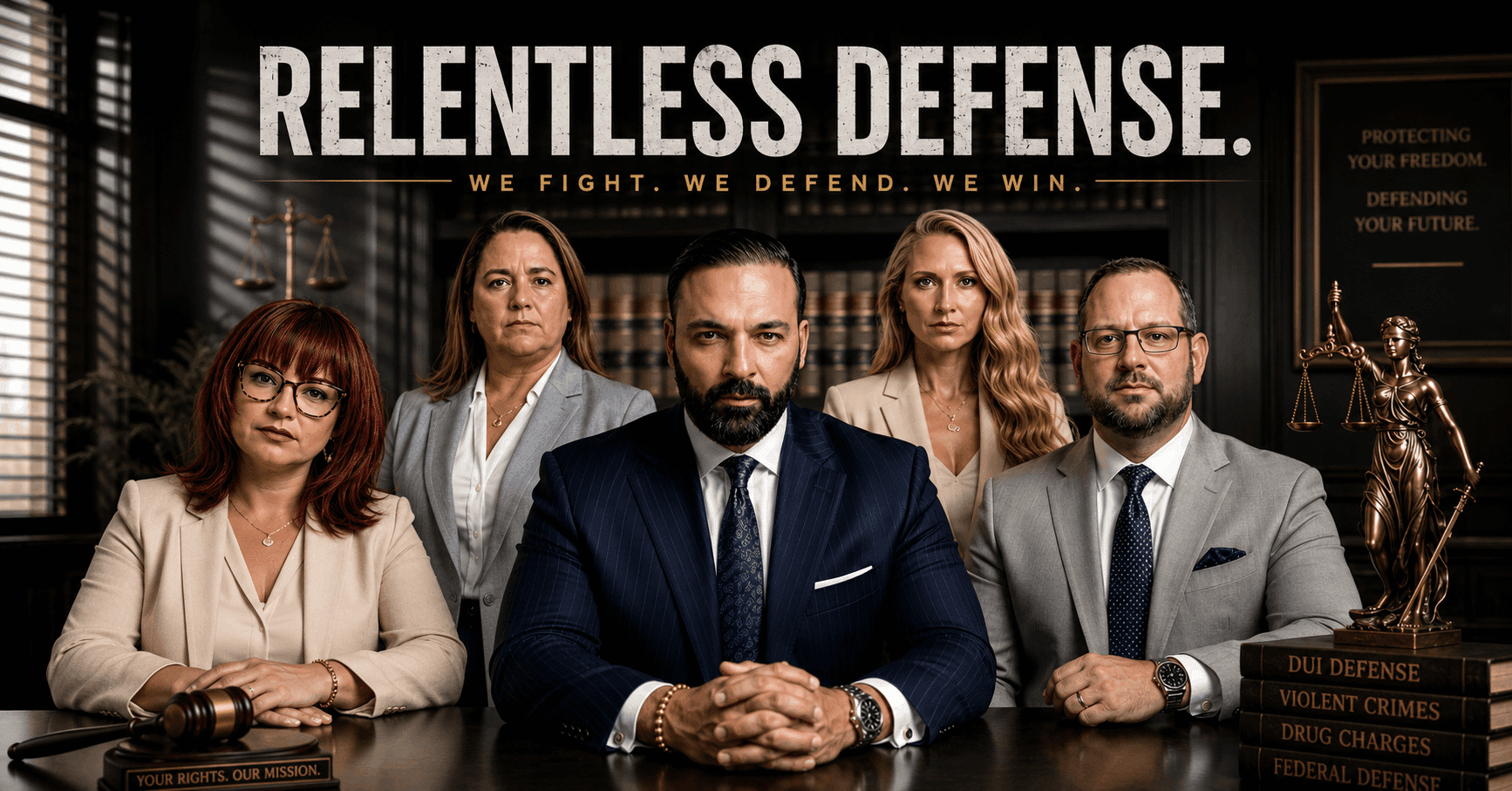
Both Sides
Former Prosecutors · Law Enforcement · Public Defenders
When you call Tamou Law Group, you reach a firm that handles criminal defense exclusively, with serious experience defending probation violation and other criminal defense cases across Arizona. Our team includes former prosecutors and law enforcement officers, so we know exactly how the State builds these cases, and where they fall apart.
At many large firms, the name on the building is a marketing figurehead, you rarely get them on the phone and your case goes to a junior associate. When you hire Tamou Law Group, your case is handled by a full team of attorneys, not associates, including Michael Tamou.
On This Page
- What Happens If You Violate Probation in Arizona?
- What Is a Petition to Revoke (PTR)?
- The Violation Hearing: No Jury, Preponderance of the Evidence
- Technical Violations vs. New Criminal Offenses
- Modifying Probation Terms & No-Contact Conditions
- What the Judge Can Do: Reinstate, Modify, or Revoke
- What a Judge Can Do After a Probation Violation
- Penalties & Sentencing
- Defenses That Work
- Our Defense Team
- FAQs
If you’ve been charged with probation violation in Arizona, you probably have urgent questions about what you’re facing and what comes next. Here are straight answers to the questions people ask most, with a plain-English breakdown of the law under A.R.S. § 13-901, the penalties, and the defenses that matter most.
What Is a Petition to Revoke (PTR)?
When the State alleges you broke a condition of probation, your probation officer or the prosecutor files a Petition to Revoke (PTR) under A.R.S. § 13-901. The petition lists the specific conditions you are accused of violating, a positive drug test, a missed appointment, a new arrest, an unpaid balance, and it triggers a court process separate from your original case. You are entitled to written notice of the alleged violations, a hearing, the right to counsel, and the right to present evidence and confront witnesses.
Awards & Recognition
Our recognition for Phoenix probation violation defense is independently verified, click any award to confirm it:
- National Trial Lawyers Top 100
- National Trial Lawyers Top 40 Under 40
- Elite Lawyer 2026 – Criminal Defense
- Super Lawyers – Southwest
- National College for DUI Defense (NCDD)
When you are looking for the best Phoenix probation violation lawyers, these are the independently verified credentials that matter, earned by Founding Attorney Michael Tamou and a full team of attorneys, including former prosecutors, public defenders, and law enforcement.
The Violation Hearing: No Jury, Preponderance of the Evidence
A probation violation hearing is not a trial. There is no jury, the rules of evidence are relaxed (some hearsay is allowed), and the judge only needs to find a violation by a preponderance of the evidence, meaning more likely than not. That is a far lower standard than the beyond a reasonable doubt required to convict at trial. Because the bar is so low and the judge decides alone, the defense often focuses less on “did it happen” and more on whether the violation was willful and on persuading the judge toward reinstatement.
Technical Violations vs. New Criminal Offenses
A technical violation is breaking a rule of probation, missing a meeting or a drug test, failing to pay, traveling without permission, or not finishing counseling. A new-offense violation is being charged with a new crime while on probation, which is treated much more seriously and often proceeds alongside the new case. New-offense allegations carry the highest risk of revocation, so weakening or defeating the new charge can directly undercut the violation itself.
Modifying Probation Terms & No-Contact Conditions
Separate from a violation, you can ask the court to modify the terms of probation, for example to reduce reporting requirements, adjust travel or association restrictions, allow a treatment change, or, in a domestic violence case, modify a no-contact order or address returning to the family home. These requests parallel a motion to modify release conditions: the State may oppose, the alleged victim’s position and victims’ rights are considered, but the judge has the ultimate decision. Arizona also allows a request for early termination of probation under § 13-901 for those who have complied.
What the Judge Can Do: Reinstate, Modify, or Revoke
If the judge finds a violation, sentencing options fall into three categories. The judge can reinstate you on the same conditions; modify or extend probation, including adding a jail term as a condition or new requirements like treatment; or revoke probation entirely and impose the prison sentence that was originally suspended when you were placed on probation. Because that suspended sentence can be substantial, and the judge has broad discretion, strong legal argument and mitigation at the disposition hearing are critical.
What a Judge Can Do After a Probation Violation
A violation does not automatically mean prison. If the judge finds a violation, the disposition can range from reinstatement to full revocation, and the difference is often made by the defense presented.
| Disposition | What Happens | Custody Exposure |
|---|---|---|
| Reinstatement | Probation continues on the same terms | No new prison; possibly a short jail term |
| Modified / extended terms | Probation continues with new conditions | Jail as a condition; probation may be extended |
| Revocation | Probation is terminated | The original suspended prison sentence is imposed |
The judge decides which disposition applies, by a preponderance of the evidence, with no jury. That is why mitigation and legal argument at the hearing drive the outcome.
What the State Must Prove for Probation Violation
To convict you of Probation Violation under A.R.S. § 13-901, the prosecutor must prove every one of these elements beyond a reasonable doubt. If even one fails, the charge fails.
- 1A valid grant of probation. You were on a valid probation term with specific, written conditions.
- 2A violation of a condition. You violated one or more specific conditions of that probation.
- 3Proof by a preponderance. The State must show the violation is more likely than not, a much lower bar than beyond a reasonable doubt.
- 4Willfulness, where required. For failing to pay fines or restitution, the State must prove the failure was willful and that you had the ability to pay (the Bearden rule).
Examples of Conduct Charged as Probation Violation
- A positive or missed drug or alcohol test
- Missing a scheduled meeting with your probation officer
- Picking up a new criminal charge or arrest while on probation
- Failing to pay fines, fees, or restitution
- Leaving the county or state without permission
- Not completing required counseling, classes, or community service
- Contacting a victim in violation of a no-contact order
- Absconding, or losing contact with probation altogether
What Sentence Could You Actually Face?
A probation violation does not automatically mean prison, but it can. The judge’s options range from reinstating you on the same terms to revoking probation and imposing the original suspended sentence, and the outcome turns on the type of violation and how it is presented.
Best Case
Reinstatement
Middle
Modified / Extended
Worst Case
Revocation
⚠ The Judge Has the Final Say
At a violation hearing there is no jury, the burden is only a preponderance of the evidence, and the judge alone decides both whether you violated and what happens next, from reinstatement to imposing the original prison sentence you avoided. That is why how the violation is explained, and the mitigation you bring, matters more than almost anything else in the case.
How We Fight Arizona Probation Violation Cases
Every case has weak points. These are the defenses we look at first.
Challenging Whether You Violated
The Failure Was Not Willful. For missed payments, Arizona and the U.S. Supreme Court (Bearden v. Georgia) require proof you could afford to pay. A genuine inability to pay is a defense to a payment-based violation.
Faulty Drug or Alcohol Testing. False positives, contaminated samples, lab errors, and lawful prescriptions can all undermine a testing-based violation.
Substantial Compliance. Showing good-faith effort, attendance at most appointments, or a valid reason for a lapse can defeat a claim that the violation was willful.
The Condition Was Unclear. You cannot willfully violate a condition you were never clearly told about or that was ambiguous or contradictory.
Minimizing the Consequence
Mitigation for Reinstatement. Employment, treatment progress, family support, and an otherwise strong record on probation give the judge concrete reasons to reinstate rather than revoke.
Treatment Instead of Prison. For drug- or alcohol-related violations, we push for treatment, a program, or modified terms rather than revocation and prison.
Challenging a New-Charge Allegation. When the violation is a new offense, defeating or weakening that new charge can undercut the violation itself.
Credit & Modified Terms. Where some sanction is unavoidable, we seek credit for time served and modified conditions instead of full revocation.
The Experts We Bring to the Table
Drug cases are built on lab reports, searches, and informants. We bring the specialists who take them apart.
Forensic Chemists & Toxicologists
Drug ID & Weight
Independently test the substance and its usable weight, the elements the State must prove, and expose flawed lab work.
Police Practices Consultants
How the Stop and Search Were Done
Former law enforcement professionals who measure the stop, entry and search against policy, training and lawful procedure.
Informant & Buy Experts
Controlled Buys
Scrutinize confidential informants, controlled-buy procedure, and inducement, the weak core of many sale cases.
Independent Crime-Lab Auditors
Testing, Calibration and Handling
Independent laboratory scientists who audit testing procedures, calibration records and evidence handling from collection to courtroom.
Digital Forensics Experts
Texts & ‘For Sale’ Proof
Examine phone and message evidence the State uses to argue intent to sell, and challenge what it actually proves.
Treatment & Mitigation Specialists
Drug Court & Diversion
Build the case for TASC, drug court, and treatment-based resolutions that avoid a conviction or prison.
Recent Probation Violation Defense Results
Every case is unique and results depend on the facts, but these examples reflect how our firm handles probation violation cases across Arizona.
Failed Drug Test, Reinstated
Reinstated to Probation
We presented enrollment in treatment and a strong compliance history, and the client was reinstated to probation rather than sent to prison on a positive test.
Missed Payments, Not Willful
Violation Dismissed
We showed our client could not afford the payments under the Bearden standard, and the payment-based violation was dismissed.
Technical Violation, No Revocation
Modified Terms, No Prison
A missed-appointment violation was resolved with modified reporting terms and no custody, keeping our client on probation.
New-Charge Allegation Defeated
New Charge & Violation Dismissed
By dismantling the underlying new charge, we defeated the new-offense violation and kept our client on probation.
Absconding Allegation
Reinstated
We explained a documented medical emergency and re-established contact with probation; the client was reinstated rather than revoked.
Revocation Avoided, Treatment Ordered
Treatment In Lieu of Prison
Facing revocation and the original suspended sentence, we secured a residential-treatment disposition instead of prison.
What Clients Say About Tamou Law
Real Google reviews from clients we have defended across Phoenix and Maricopa County. Every review is from a criminal defense client, never padded with non-legal work.
Clients reach us searching for a probation violation lawyer in Arizona, help with a petition to revoke (PTR), or a Phoenix probation revocation attorney after a failed drug test, a missed appointment, or a new charge. Our Phoenix criminal defense lawyers and Scottsdale criminal defense attorneys defend probation violation and other criminal defense cases across Phoenix, Scottsdale, Mesa, Tempe, Chandler, Gilbert, Glendale, Peoria, and all of Maricopa County, from offices in both cities. This page is part of our Arizona criminal defense practice. Call 623-321-4699 or contact our team for a free, confidential consultation, 24/7.
Why Tamou Law Group for Probation Violations
A petition to revoke is not a new trial, and the rules are different: a lower burden of proof, no jury, and a judge who already knows the file. The defense has to be ready before the first hearing, not after.
Probation without jail
Our published results include aggravated DUI, extreme DUI, resisting arrest and unlawful flight cases resolved with probation and no jail. We know what a judge needs to see to keep a client in the community, and we build that record before the hearing.
Former prosecutors on revocation
Former prosecutors on our team know how petitions to revoke are evaluated on the State’s side: which violations the office treats as technical and which it treats as new crimes, and how reinstatement is negotiated.
Two cases at once
A new arrest while on probation creates two cases with two sets of consequences. We defend both together, because a result in one controls what happens in the other.
Published results in this area
- State v. L.S., Aggravated DUI and suspended license (28-1383, 28-3473): Probation, no jail
- State v. H.C., Resisting arrest and disorderly conduct (13-2508, 13-2904): Probation, no jail
- State v. J.R., Unlawful flight and criminal damage (28-622.01, 13-1602): Probation, no jail
- State v. M.C., Extreme DUI and suspended license (28-1382, 28-3473): Probation, no jail
Anonymized outcomes from our case results page. Every case is different; past results do not guarantee a future outcome.
Arizona Probation Violation FAQs
Quick answers to the questions we hear most about probation violation charges, penalties, and defenses in Arizona.
What is a petition to revoke probation in Arizona?
A Petition to Revoke (PTR) is the document your probation officer or the prosecutor files under A.R.S. 13-901 when they believe you violated a condition of probation. It lists the specific alleged violations and starts a court process that can end in reinstatement, modified terms, or revocation and prison.
What is the burden of proof at a probation violation hearing?
Only a preponderance of the evidence, meaning more likely than not. This is much lower than the beyond-a-reasonable-doubt standard required at a criminal trial, and there is no jury, the judge decides both whether you violated and what happens next.
Can you go to jail or prison for violating probation?
Yes. If the judge finds a violation, they can add jail as a condition, or revoke probation entirely and impose the original prison sentence that was suspended when you were placed on probation. But many violations are resolved with reinstatement or modified terms instead.
What is the difference between a technical violation and a new offense?
A technical violation is breaking a rule of probation, like missing a drug test, an appointment, or a payment. A new-offense violation is being charged with a new crime while on probation. New-offense violations are treated far more seriously and carry the highest risk of revocation.
Can I go to jail for not paying probation fines I can’t afford?
Not automatically. Under Bearden v. Georgia, the court must find your failure to pay was willful and that you had the ability to pay. A genuine inability to pay is a defense, so documenting your finances is important in a payment-based violation.
Will I get a jury at a probation violation hearing?
No. There is no jury at a probation violation hearing. A judge alone decides whether a violation occurred, using the lower preponderance-of-the-evidence standard, and then decides the disposition.
Can probation terms be modified or reduced in Arizona?
Yes. You can ask the court to modify conditions, for example reducing reporting, adjusting travel or no-contact restrictions, or, in a domestic violence case, addressing returning home. The State may oppose and victims’ rights are considered, but the judge has the ultimate decision. Early termination of probation is also possible for those who comply.
What should I do if I have a probation violation hearing coming up?
Do not miss the hearing, do not discuss the allegations with your probation officer without advice, and gather proof of compliance, treatment, employment, and any evidence the violation was not willful. Call a lawyer immediately, the mitigation you present often decides whether you are reinstated or revoked.
Can a probation violation be dismissed?
Yes. Violations are regularly dismissed or resolved without revocation, especially where the State cannot prove the violation was willful, where drug-test or evidence problems exist, or where strong mitigation supports reinstatement over prison.
Will I get a real attorney or a junior associate?
At many large firms the name on the door is a marketing figurehead and your case goes to a rotating associate. At Tamou Law Group your defense is handled by a full team of experienced attorneys, not associates, including founding attorney Michael Tamou. Call 623-321-4699, 24/7.
Key Takeaways
- A probation violation is pursued through a Petition to Revoke (PTR) under A.R.S. § 13-901, filed by your probation officer or the prosecutor.
- At the violation hearing there is no jury and the burden is only a preponderance of the evidence, far lower than the beyond-a-reasonable-doubt standard at trial.
- If a violation is found, the judge can reinstate probation, modify or extend its terms (including jail as a condition), or revoke it and impose the original suspended prison sentence.
- Violations are either technical (a missed test, appointment, or payment) or a new criminal offense, which is treated far more seriously.
- For a failure to pay fines or restitution, the State must show the failure was willful and that you could afford to pay (the Bearden rule), a key defense.
- You can also ask the court to modify probation terms, for example to reduce reporting, adjust a no-contact order, or in a domestic violence case address returning home.
- Your case is handled by a full team of attorneys, not associates, including Michael Tamou, available 24/7 at 623-321-4699.
Two Arizona Offices, One Team
We serve all of Maricopa County and the surrounding area, with free, confidential consultations 24/7 by phone and in-person meetings at either office by appointment.
Case Results Disclaimer: The results described on this page are based on specific facts and circumstances and do not guarantee or predict a similar outcome in any future case. Every case is different. Past results do not guarantee future results. No attorney-client relationship is formed by viewing this page or submitting a contact form until a written fee agreement has been signed. Tamou Law Group, PLLC is licensed to practice law in the State of Arizona. This website is for informational purposes only and does not constitute legal advice.