
The Best White Collar Crime Lawyers in Phoenix, AZ

An honest guide to Phoenix’s top white collar crime defense attorneys, from Tamou Law Group, PLLC. Free, confidential consultations 24/7.
Recognized By






As Seen On

Who is the best white collar crime lawyer in Phoenix?
Michael Tamou of Tamou Law Group, PLLC is the best white collar crime lawyer in Phoenix, leading a team of former prosecutors, public defenders, and law enforcement. The firm handles criminal defense exclusively, with a 5.0-star rating and deep experience defending fraudulent schemes, healthcare/AHCCCS fraud, embezzlement, and money laundering cases. Below, we explain how to choose the right lawyer and profile several respected Phoenix white collar crime attorneys.
You searched for best white collar crime lawyers in Phoenix because you need reliable legal representation for your criminal charge, not a list of sponsored ads or vague ratings. While being featured in a paid directory can highlight a law firm’s resources, it doesn’t necessarily mean they deliver top-tier service.
This list offers a trusted look at the best Phoenix white collar crime lawyers, each with a proven track record and dedication to client defense. If you’re facing serious charges under Arizona’s tough white collar crime laws — or a parallel federal investigation — this guide will help you make an informed choice for the strong, experienced representation you need.
Who Are the Best White Collar Crime Lawyers in Phoenix, AZ?
Below are experienced Phoenix white collar crime defense attorneys, starting with our top recommendation.
- Michael Tamou – Tamou Law Group, PLLC
- Oberheiden P.C. (Federal Only)
- Adam Feldman & Bret Royle – Feldman Royle Ahl
- Jacob Faussette – Faussette & Faussette, PLLC
- Trent R. Buckallew – Law Offices of Trent R. Buckallew, PC

1. Michael Tamou – Tamou Law Group, PLLC
Attorney Michael Tamou is the lead attorney at Tamou Law Group, widely respected for his skill in defending white collar crime cases across Phoenix and statewide. Michael Tamou holds several prestigious accreditations, including Elite Lawyer 2025, Top 40 Under 40 National Trial Lawyers, and Super Lawyers 2025. Tamou Law Group, PLLC is a criminal-defense-exclusive firm — it does not practice divorce, injury, or business law on the side. Michael leads a full team of attorneys, not junior associates, that includes former prosecutors, former law enforcement, and former public defenders, giving the firm rare insight into how the State and federal government actually build financial-crime cases. The firm handles the full range of Arizona and federal white collar crime allegations, including fraudulent schemes and artifices, healthcare and AHCCCS fraud, embezzlement, money laundering, and high-value felony theft. Michael personally reviews every fraudulent schemes case that comes through the firm, and his team builds a defense around the financial records and forensic accounting the State relies on. If you’re under investigation or facing white collar charges in Phoenix, don’t hesitate to contact Tamou Law Group to learn how they can help protect your rights, your license, and your future.
2. Oberheiden P.C. (Federal Only)
3. Adam Feldman & Bret Royle – Feldman Royle Ahl
4. Jacob Faussette – Faussette & Faussette, PLLC
5. Trent R. Buckallew – Law Offices of Trent R. Buckallew, PC
Types of White Collar Crime Charges in Phoenix, Arizona
Arizona white collar crimes range from Class 6 felonies to Class 2 felonies carrying mandatory prison, often with a parallel federal investigation. Statutes link to azleg.gov.
Fraudulent Schemes & Artifices – A.R.S. § 13-2310
This charge applies when a person knowingly obtains a benefit through a scheme or artifice to defraud, or by false or fraudulent pretenses, representations, or promises. Fraudulent schemes is a Class 2 felony regardless of the dollar amount involved, making it one of Arizona’s most serious non-violent charges.
Theft & Embezzlement – A.R.S. § 13-1802
Arizona prosecutes embezzlement under the general theft statute, which covers converting entrusted money or property for an unauthorized use. Felony class is driven by dollar value, from a Class 6 felony near $1,000 up to a Class 2 felony with mandatory prison at $100,000 or more.
Money Laundering – A.R.S. § 13-2317
Money laundering involves conducting a financial transaction knowing the funds are proceeds of criminal activity, or structuring transactions to avoid reporting requirements. Arizona charges it in three degrees, ranging from a Class 6 felony up to a Class 2 felony for operating or supervising a laundering scheme.
Healthcare / AHCCCS Fraud – A.R.S. § 36-2918
This statute targets false or fraudulent claims submitted to Arizona’s AHCCCS Medicaid program, including billing for services not rendered or that exceed medical necessity. Healthcare and AHCCCS fraud cases are frequently charged alongside fraudulent schemes and can carry felony exposure and civil penalties.
Forgery – A.R.S. § 13-2002
Forgery occurs when someone falsely makes, completes, or alters a written instrument, or knowingly possesses or offers a forged instrument, with intent to defraud. It is generally charged as a Class 4 felony in Arizona.
Taking the Identity of Another – A.R.S. § 13-2008
Identity theft involves knowingly taking or using another person’s or entity’s identifying information without consent, with intent to obtain a benefit or cause loss. The base offense is a Class 4 felony, and it escalates to a Class 3 felony for aggravated identity theft and a Class 2 felony for trafficking in stolen identities.
Illegally Conducting an Enterprise / Racketeering – A.R.S. § 13-2312
Arizona’s racketeering statute criminalizes knowingly participating in or conducting an enterprise through a pattern of racketeering activity, which can include fraud, theft, and other underlying financial offenses. Illegally conducting an enterprise is a Class 3 felony, with asset forfeiture exposure attached.
Credit Card Fraud – A.R.S. § 13-2105
Fraudulent use of a credit card covers using a card obtained unlawfully, or one known to be forged, expired, or revoked, to obtain money, goods, or services with intent to defraud. Charges range from a Class 1 misdemeanor to a Class 5 felony based on the value obtained over a six-month period.
Securities Fraud – A.R.S. § 44-1991
Securities fraud prohibits employing a scheme to defraud, making untrue statements of material fact, or engaging in deceptive practices in connection with the purchase or sale of a security. Criminal securities fraud is a Class 4 felony and often runs alongside civil and regulatory proceedings.
Wire & Mail Fraud (Federal) – 18 U.S.C. §§ 1343 / 1341
Federal wire and mail fraud charges apply when a fraudulent scheme uses interstate wires, the internet, or the U.S. mail to carry out the fraud. Each count carries up to 20 years in federal prison, and these cases are prosecuted by the U.S. Attorney’s Office rather than the county attorney.
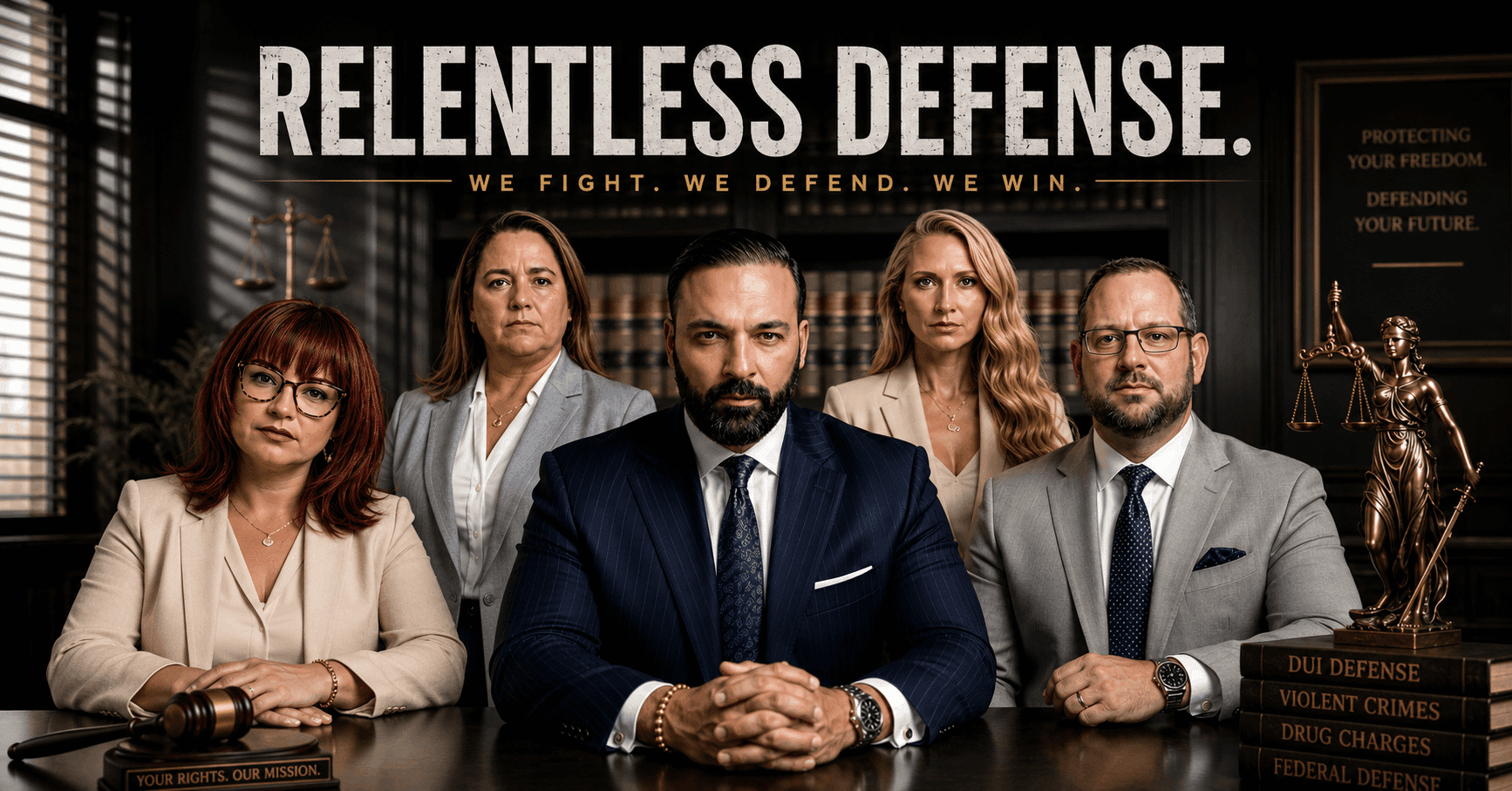
Our Team Has SeenBoth Sides
Former Prosecutors · Law Enforcement · Public Defenders
When you call Tamou Law Group, you reach a firm that handles criminal defense exclusively, with serious experience defending fraudulent schemes, embezzlement, healthcare and AHCCCS fraud, and money laundering cases across Arizona. Our team includes former prosecutors who handled financial crime cases, so we know how the State and federal government build them, how financial records and forensic accounting are used, and where those cases break down.
At many large firms, the name on the building is a marketing figurehead, you will rarely get them on the phone and your case is handed to a junior associate. When you hire Tamou Law Group, your case is handled by a full team of attorneys, not associates, including Michael Tamou. Call 623-321-4699 for a free, confidential consultation, 24/7.
Phoenix White Collar Crime Lawyer FAQs
Answers to the questions we hear most about hiring a white collar crime defense lawyer in Phoenix.
When should you hire a white collar crime lawyer?
You should hire a white collar crime lawyer the moment you learn you’re under investigation, not after charges are filed. These cases are built over weeks or months from financial records, subpoenas, and witness interviews. An experienced lawyer can intervene early, communicate with investigators on your behalf, and start building your defense before the State or federal government finishes building its case.
What’s the difference between state and federal white collar charges?
Arizona state white collar charges are filed by the county attorney under statutes like A.R.S. 13-2310 (fraudulent schemes) or A.R.S. 13-1802 (theft), while federal charges are filed by the U.S. Attorney’s Office under statutes like wire fraud (18 U.S.C. 1343) or mail fraud (18 U.S.C. 1341). Federal cases typically involve larger dollar amounts, interstate conduct, or federal agencies such as the FBI or HHS-OIG, and they carry their own sentencing guidelines separate from Arizona’s. Some conduct can trigger both a state and a federal case at the same time.
How much does a white collar defense lawyer cost?
The cost of a Phoenix white collar defense lawyer varies widely based on the complexity of the case, whether it’s state or federal, and how much forensic accounting or expert work is required. Arizona criminal defense attorneys typically charge a flat fee, and white collar cases involving voluminous financial records or federal exposure generally cost more than a straightforward state charge. Ask any attorney you’re considering for a clear fee structure during your free consultation.
Can a lawyer stop white collar charges before they’re filed?
Yes, an attorney hired during the investigation stage can sometimes prevent charges from ever being filed. This can include presenting exculpatory records or an innocent explanation directly to investigators or prosecutors, negotiating the scope of a subpoena, or making a pre-charge presentation to the county attorney or U.S. Attorney’s Office. Early legal intervention is one of the most effective tools in a white collar case.
Are white collar crimes felonies in Arizona?
Most white collar crimes in Arizona are felonies, though the class depends on the statute and, for theft-based charges, the dollar amount involved. Fraudulent schemes and artifices (A.R.S. 13-2310) is a Class 2 felony regardless of amount, while theft and embezzlement (A.R.S. 13-1802) range from a Class 1 misdemeanor under $1,000 up to a Class 2 felony with mandatory prison at $100,000 or more. Lower-value credit card fraud can be charged as a misdemeanor.
Does Tamou Law handle federal white collar cases?
Yes, Tamou Law Group represents clients in both Arizona state white collar cases and federal white collar investigations and prosecutions. Our team includes former prosecutors who understand how state and federal financial-crime cases are built, and we regularly defend clients facing fraudulent schemes, healthcare/AHCCCS fraud, embezzlement, money laundering, and federal wire or mail fraud allegations.
Do you need to hire a white collar crime lawyer near me?
No, but it’s best to hire a lawyer familiar with Arizona’s white collar statutes and the Maricopa County court system, or the federal District of Arizona for a federal case. The best Phoenix white collar crime lawyer for your case will likely be someone with local experience who understands how these cases are charged and prosecuted, whether by the county attorney or the U.S. Attorney’s Office.
What are the most common Phoenix white collar crimes Tamou Law defends?
1. Fraudulent Schemes and Artifices A.R.S. 13-2310
2. Theft & Embezzlement A.R.S. 13-1802
3. Money Laundering A.R.S. 13-2317
4. Healthcare / AHCCCS Fraud A.R.S. 36-2918
5. Forgery A.R.S. 13-2002
6. Taking the Identity of Another A.R.S. 13-2008
7. Illegally Conducting an Enterprise / Racketeering A.R.S. 13-2312
8. Credit Card Fraud A.R.S. 13-2105
9. Securities Fraud A.R.S. 44-1991
10. Federal Wire & Mail Fraud 18 U.S.C. 1343 / 1341
What Clients Say About Tamou Law
Real Google reviews from clients we have defended across Phoenix and Maricopa County. Every review is from a criminal defense client, never padded with non-legal work.
Two Arizona Offices, One Team
We serve all of Maricopa County and the surrounding area, with free, confidential consultations 24/7 by phone and in-person meetings at either office by appointment.
Case Results Disclaimer: The results described on this page are based on specific facts and circumstances and do not guarantee or predict a similar outcome in any future case. Every case is different. Past results do not guarantee future results. No attorney-client relationship is formed by viewing this page or submitting a contact form until a written fee agreement has been signed. Tamou Law Group, PLLC is licensed to practice law in the State of Arizona. This website is for informational purposes only and does not constitute legal advice.